
Introduction
Finding time to exercise can be difficult when you have work, household responsibilities, children, or other commitments.
For many women in Pakistan, exercising at home offers a convenient way to include physical activity in a busy routine without needing a gym membership or expensive equipment.
The good news is that movement doesn’t have to be complicated. Walking, simple bodyweight exercises, and everyday physical activities can all contribute to a more active lifestyle.
Here are five beginner-friendly activities you can consider adding to your routine.
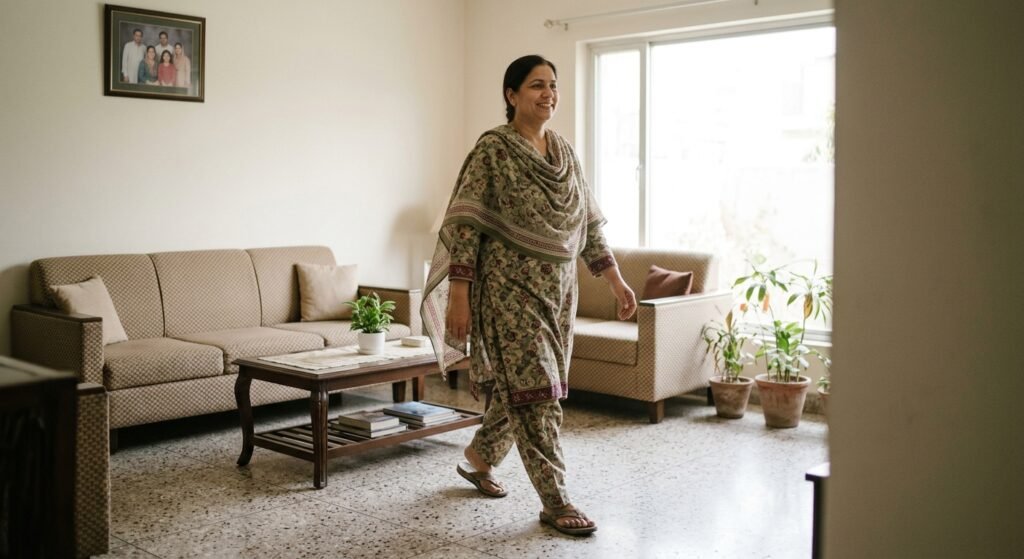
1. Walking Indoors or Outdoors
Walking is a simple way to get moving, and it can be adapted to different fitness levels.
If going outdoors isn’t convenient, you can walk inside your home, march gently in place, or walk around your courtyard.
Start with a comfortable duration and gradually increase it as your fitness and schedule allow.
Try walking while listening to your favorite podcast or setting aside a specific time each day for movement.
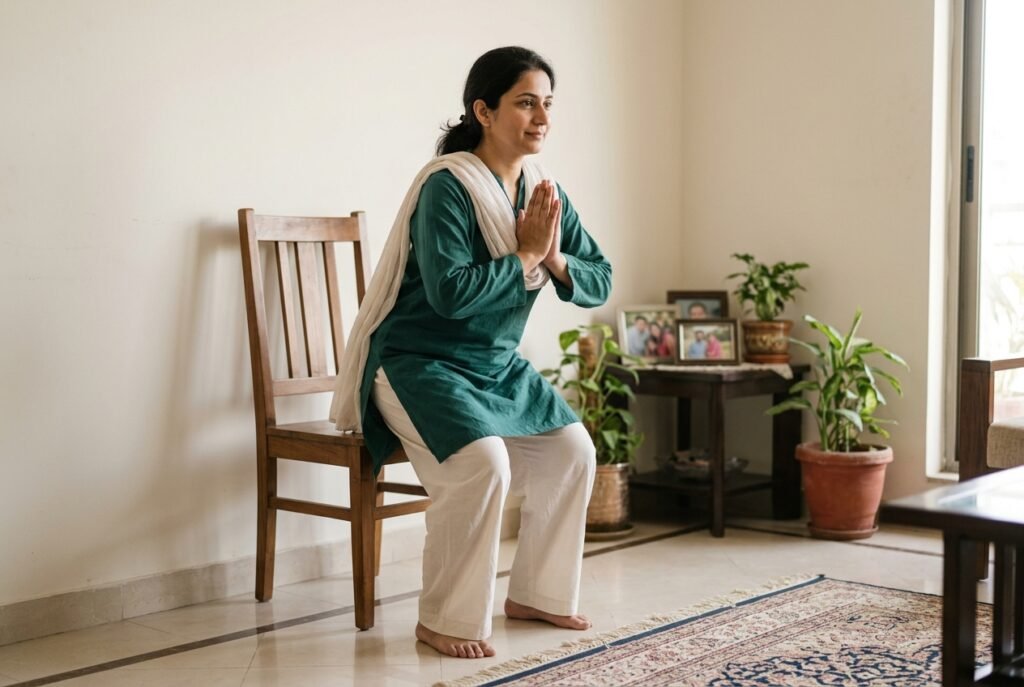
2. Chair Squats
Chair squats are a beginner-friendly way to practice a basic lower-body movement.
How to do them:
- Stand in front of a sturdy chair with your feet about hip-width apart.
- Slowly bend your knees and move your hips back as if sitting down.
- Lightly touch the chair, then stand up again.
- Repeat at a comfortable pace.
Begin with a few repetitions and rest as needed. Use the chair for support if your balance requires it.
Avoid movements that cause pain, and choose a range of motion that feels comfortable.
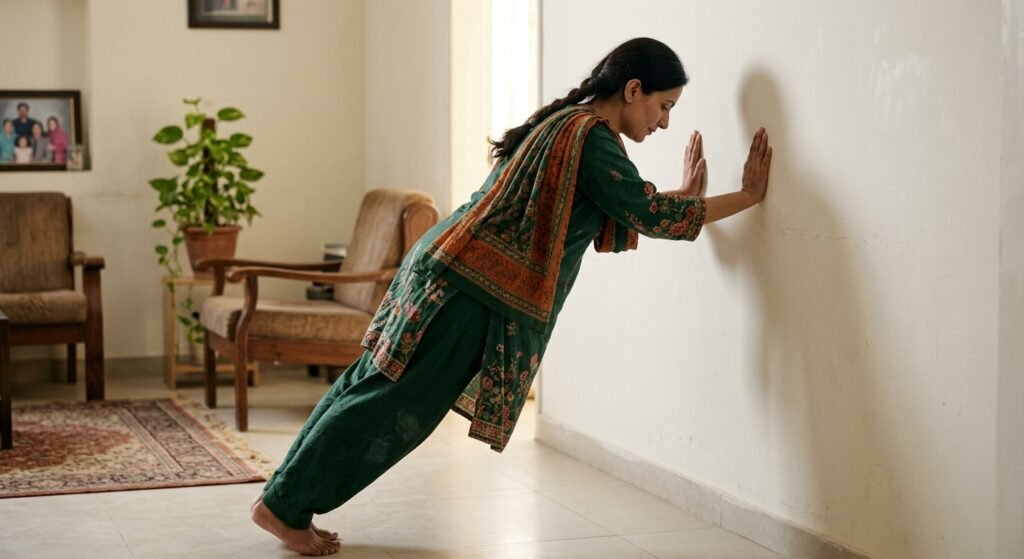
3. Wall Push-Ups
Wall push-ups are a modified push-up that allows you to practise an upper-body strengthening movement using a wall for support.
How to do them:
- Stand facing a wall and place your palms against it at approximately shoulder height.
- Step back slightly while keeping your body aligned.
- Bend your elbows and bring your chest gently towards the wall.
- Push through your hands to return to the starting position.
Start with a small number of repetitions and gradually increase them as you become more comfortable.
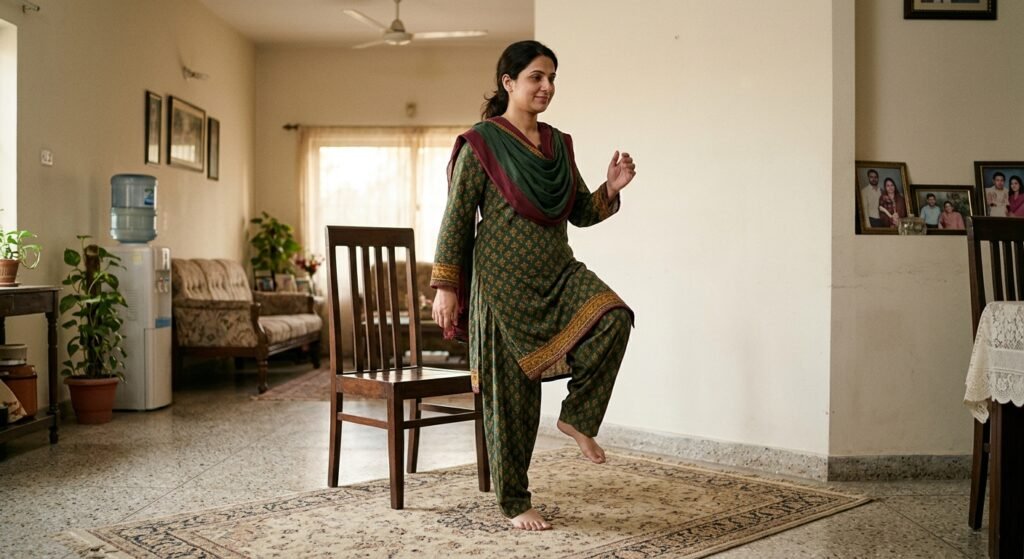
4. Gentle Standing Marches
Standing marches can be an easy way to introduce movement into your day.
How to do them:
- Stand upright with your feet comfortably apart.
- Lift one knee gently, then lower it.
- Alternate legs at a comfortable pace.
- Swing your arms naturally if you feel steady.
You can start with 30 seconds and rest before repeating.
If needed, hold the back of a stable chair for balance.
5. Gentle Stretching and Mobility
Gentle stretching and mobility exercises can help you practice comfortable movement and make time to unwind.
You might try:
- Shoulder rolls.
- Gentle neck movements within a comfortable range.
- Ankle circles while seated.
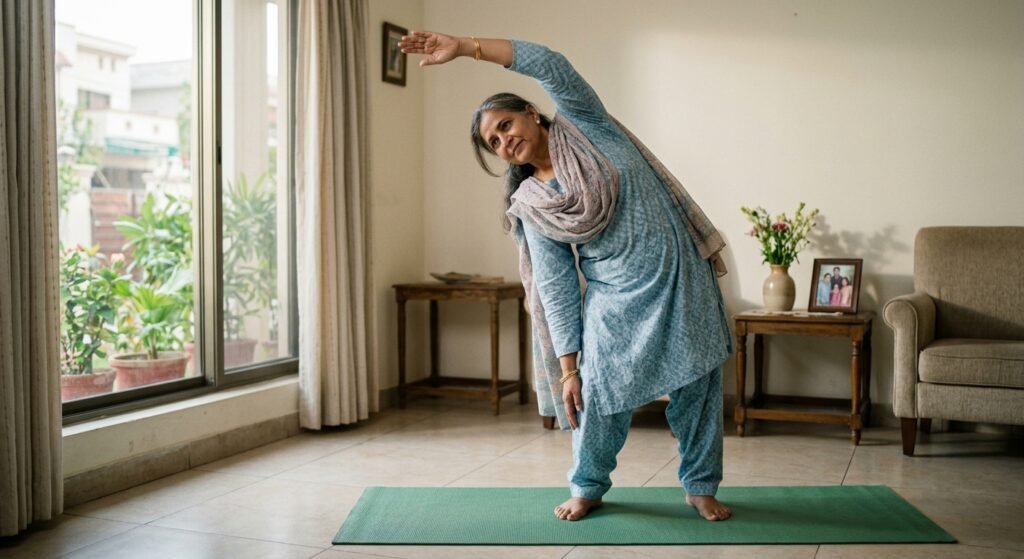
- Gentle side stretches.
Move slowly, breathe normally, and avoid forcing a stretch or bouncing.
Stretching should feel comfortable, not painful.
How to Build a Simple Weekly Routine
You don’t need to start with long or intense workouts. Begin with manageable amounts of activity and increase gradually.
Day | Suggested activity |
Monday | Walking and chair squats |
Tuesday | Walking and wall push-ups |
Wednesday | Gentle stretching and mobility |
Thursday | Walking and standing marches |
Friday | Walking and a few comfortable strengthening exercises |
Saturday | Enjoyable movement, such as dancing or a family walk |
Sunday | Rest or gentle movement as desired |
This is an example, not a prescribed exercise plan. Adjust it to your fitness, health, and schedule.
Final Thoughts
Making exercise part of your routine doesn’t require a gym, special equipment, or hours of free time.
Start with activities you enjoy, listen to your body, and celebrate small steps towards a more active lifestyle.
At Bunchup4Wellness, our wellness approach focuses on practical lifestyle habits, personalized guidance, and supportive accountability to help women work towards their individual goals.
Safety note: This article is for general educational purposes. Consult a healthcare professional before beginning a new exercise routine if you are pregnant, recently postpartum, have a medical condition, or have concerns about physical activity. Stop exercising if you experience chest pain, dizziness, or unusual shortness of breath.